

News
 news startpage movie & picture
About
about publications scienceCompetencies
projectstopics agenda 21/Rio +10/+20
news startpage movie & picture about publications scienceprojectstopics agenda 21|
Food Security Under Heavy Fire, The Ongoing Conflict between Israel, the USA, and Iran – 7 Days After the Start of the War
 in: ISPSW Strategy Series: Focus on Defense and International Security, 1204, 1-10, March 09, 2026, Berlin, Germany, https://www.ispsw.com/wp-content/uploads/2026/03/1204_Kern.pdf, 2026.
We live in an era of growing global instability, marked by rising conflicts, geopolitical tensions, and the erosion of shared values. Russia’s invasion of Ukraine in 2022 signaled a shift from a “cold” to a “hot” war. On February 28, 2026, tensions escalated further with military confrontations involving Israel, the United States, and Iran. History shows that wars inevitably bring suffering, hunger, and destruction, and that peace comes at a high cost. Modern conflicts are fought not only with weapons but also through economic pressure, targeting critical resources. Food security is particularly affected, as supply chains are disrupted, prices rise, and trade routes become uncertain. Conflicts in strategically important regions like the Middle East have global consequences, especially for countries dependent on food imports. Therefore, resilient food systems, diversified trade, and strong preparedness strategies are essential to ensure stable food supplies in times of geopolitical crisis.  Veröffentlichung Veröffentlichung |
|
Is Germany Prepared to Ensure Food Security in Order to Overcome a Serious Crisis or War? What Needs to Be Done, by Whom until When? An Emergency Call in 2026!
 in: ISPSW Strategy Series: Focus on Defense and International Security, 1199, 1-34, February 24, 2026, Berlin, Germany, https://www.ispsw.com/wp-content/uploads/2026/03/1199_Kern.pdf, 2026.
This paper was written before the outbreak of the war between Israel, the United States, and Iran on February 27, 2026. Summary: Smart decisions enable forward-looking action. The paper is an urgent wake-up call to secure food, agriculture, and food supplies in Germany and Europe in the face of growing global crises, conflicts, and ongoing and potential wars. Freedom and peace can no longer be taken for granted, but must be actively defended. Food security is becoming a key issue. Under normal conditions, Germany has a good food supply thanks to its highly efficient agriculture and food supply chains. However, in the event of a prolonged crisis or war, significant weaknesses become apparent. Germany is not unprepared, but it is also not sufficiently prepared. Food is not a luxury good—it is strategic security and the foundation for stability, sovereignty, and sustainable crisis management. Consequently, agriculture and food production are part of the critical infrastructure that must be protected as a matter of priority. Germany's security must also be defended “in the fields, on farms, in food production centers, and in supermarkets,” because tanks alone cannot ensure internal peace. The defense of critical infrastructure, including agriculture and food production, against air strikes and drones should be a top priority. The necessary financial resources should be provided from the “special fund.” The resilience of agricultural production must be strengthened. This includes strategic reserves of seeds, fertilizers, pesticides, animal feed, and spare parts, the expansion of decentralized energy supply systems on farms, and the protection of digital infrastructures against cyber threats. Agriculture, production and supply chains, and the population must be systematically made crisis- and war-ready. Financial support for resilient production, for example in the form of a “resilience bonus,” is urgently needed. Veröffentlichung |
|
Vision Paper: BioRevolution: From Genes to Global Solutions in Crop Production 2025/2052 and Beyond
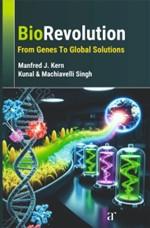 in: BioRevolution – From Genes to Global Solutions, Kern, M., Kunal, and Singh, M. (eds.), pp. 1-29, M/s Agrobios, Jodhpur, India, 2026.
This compelling vision paper sets the strategic horizon of the bio-revolutionary area in agriculture and food production. Biotechnology is no longer confined to laboratories or academic journals—it is quietly and profoundly shaping how we live, heal, eat, and care for our planet. Farmers, scientists, politicians, the public at large, and young people especially should be encouraged to be optimistic and to go for and improve the DNA-®evolution of agriculture to add value to agriculture, for the betterment of societies and to enable a peaceful life on earth. Veröffentlichung |
|
Life Time Achievement Award awarded to Dr. Manfred J. Kern by IFSDAA & AASF, Göttingen, Germany, 2023
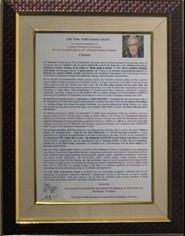 The Life Time Achievement Award is accorded to Dr. Manfred J. Kern in recognition of his outstanding contributions in the field of agricultural sciences, cutting-edge technologies, innovations in food production (basic food, functional food, pharma-farming) and food security, global security, sustainable development, crop/animal and human health, biodiversity, soil conservation, water, climate change, carbon footprint, renewable energy/resources, fossil fuel free farming, nano (bio) technolgy, impact of micro-/nanoplastics; knowledge transfer from private to public sector; for creating and sharing many unique and multidiscilpinary visions of global trends from 1995 to 2025/2052; for building bridges to the future; for offering orientation and leadership, for his demanding education, fascinating lectures, his motivation and inspirations.
 Last but not least, he is accorded for his immense recognition worldwide and for his professional distinguished services to life-sciences, people, societies and humanity. We all wish him great success, deep inner satisfaction, and a healthy life ahead. Veröffentlichung |
|
Selected Publications of Dr. Manfred Kern (1997 – March 2026)
 For over 30 years, Dr. M. Kern has pursued a logically structured, consistent, and interdisciplinary approach, spanning from basic research to applied solutions and extending to global visions. His work is practice-oriented and has continuously evolved along key future-oriented themes.
Starting with agriculture and food security, his focus progressively expanded to include health, the bioeconomy, biotechnology, digitalization, decision agriculture, Agriculture 5.0, artificial intelligence, and crisis management. In doing so, it addresses major global challenges such as hunger, climate change, geopolitical conflicts, military conflicts and systemic crises. The aim is to provide decision-makers in science, politics, and business with sound guidance and reliable foundations for action. At the core are guiding principles and future visions for the years 1995-2025 to 2050, aimed at ensuring food security and health for millions of people, as well as preserving ecosystems. Food security is not viewed as an isolated agricultural issue, but as a fundamental human need and a right enshrined in international law. At the same time, it has evolved into a “cross-cutting risk,” closely intertwined with health, security, economic stability, as well as the availability and sustainable use of resources and political frameworks. In addition to structural challenges such as poverty, unequal resource distribution, market volatility, lack of purchasing power, trade imbalances, and insufficient technology transfer, acute risk factors are increasingly coming into focus. These include epidemics and pandemics, terrorism, and armed conflicts, which together create a “polycrisis reality.” Food security is system-critical and not merely a sectoral issue. However, the work does not only describe challenges and risks. It also develops concrete solutions, formulates clear priorities, and outlines actionable strategies. In part, it is intentionally conceived as a warning against escalating developments, but above all as an evidence-based and urgent call for decisive action. The central imperative is: Do more with less. Do it better. Do it with less waste. Do it with less emissions. Do it for people. Do it for the planet. Do it in time. This guiding principle directly addresses the requirements of modern decision-making processes in agriculture and food systems. It calls for increased efficiency alongside reduced resource consumption and emissions, a significant minimization of losses along the entire value chain, and a clear focus on societal benefit and ecological sustainability. Veröffentlichung |
|
Carbon Sequestration in Soil as a Countermeasure against Global Warming and Improvement of Soil Productivity 2025/2050 – Essential Key Targets of ‘Plant Breeding 5.0‘
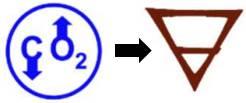 Key Note Lecture held at the International Symposium on Enhancement of Carbon Sequestration to the Field by the Agricultural Activities, organized by Faculty of Agriculture and Department of Bio-Sciences and Technology, Maharishi Markandeshwar, Mullana-Ambala, Haryana, India, November 06-07, 2025, in Association with IFSDAA, Germany and SSARM, India, 2026.
To protect the soil, sequester CO2, and mitigate climate change, plant breeding programs should rethink and focus on the following (Kern, M., 11/2025): - increase yield, e.g. produce more fertile ovaries and grains per floret in wheat (Schoen, A. et al., 9/2025) - mitigate climate change without compromizing yield (Rizi, M. & Mohammadi, M., 5/2023) - ensure crops maintaing their nutritional value while benefiting from accelerated growth (Acorn Horticulture, 7/2025) - use the ‘CO2-fertilization‘ effect, to increase photosynthesis and biomass production - overcome the ‘dilution‘ effect, the reduction of minerals, nutrients and overall quality - boost storage of soil carbon - reduce carbon from atmosphere - produce more and deeper roots (Rizi, M.S. & Mohammadi, M., 5/2023) - store carbon in deeper soil layers - be resilient under changing environments (e.g: draught and heat, water stress) - improve N2 fixation from the air - improve water efficiency - resist to phytopathogenic diseases; these are usually transmitted by vectors such as the cicada Pentastiridus leporinus (Hemiptera: Cixiidae) and include diseases such as Stolbur phytoplasma in sugar beets and potatoes, Arsenophorus phytopsthogenicus in sugar beets, potatoes, onions, or bacterial wilt in carrots and beetroot - resist to micro- and nanoplastics in the soil and environment (Kern, M., 2024) - protect plant carbon from microbes (Poffenbarger, H. et al., 3/2023) - overcome the fact, that many crop varieties are more suseptible to biotrophic viral pathogens (e.g. soybean) (Sanchez-Lucas, R. & Luna, E., 3/2025) - avoid weakening the plant immune systems - maximize plant carbon fixation during fallow period (Poffenbarger, H. et al., 3/2023) - identify and manipulate genes associated with suberin synthesis - develop crops which are significantly synergized by biochar (Li, J. et al., 1/2025) - develop crops which are significantly synergized by biochar plus microbial inocculants - develop crops which are significantly synergized by biochar plus nano-encapsulation of biofertilizer (Markets and Markets, 5/2025) - improve energy efficiency in biofuel crops by actively remove CO2 from the atmosphere (Babbar, S. et al., 4/2025) - improve cover crops such as CoverCress (Innovative Nourishing Tomorrow, 2/2020) - transform annual crops to perennial crops, e.g. Kernza® grain, (Land Institute, USA, 5/2022), perennial rice (Zhang, S. et al., 11/2022) - include understudied crops, orphan crops, landreaces, and crop wild relatives (Byrne, P.F., 2023) - utilize relevant characteristics of C4 plants to enhance the CO2 absorption capacity of C3 plants (Zhao, M. et al., 3/2025) - design carbon storage crops Yes, indeed, we need a DNA-®evolution of Agriculture – a ‘Second Green Revolution‘ in plant breeding and agriculture. With ‘Plant Breeding 5.0‘ and ‘Agriculture 5.0‘ (Kern, M., 2025c) it is possible to create added value for agriculture by improving soil productivity, sequestering CO2 from the atmosphere, combating climate change, reducing the carbon footprint, protecting the environment, improving the ecological-economic benefits for farmers and enabling sustainable life on Earth. Furthermore, let us not forget the following warning from a piece of wisdom put into words 3.500 years ago: “Upon this handful of soil our survival depends. Husband it and it will grow our food, our fuel, and our shelter and surround us with beauty. Abuse it and the soil will collapse and die, taking humanity with it.“ (From Vedas Sanskrit Scripture - 1500 BC). Veröffentlichung |
|
Vision Paper: Decision Agriculture – Agriculture 5.0 / Pros and Cons of Artificial Intelligence 2025/2050
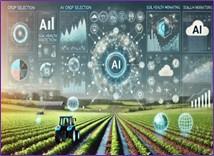 in: Sustainable Approaches for Resource Management, Food Security and Climate Change, Behl, R.K., Sharma, P.K., Arya, R.K., and Morzog, E. (eds.), Agrobios International, Jodhpur, India, 2025, pp 1-26.
“Decision Agriculture” (Agriculture 5.0) describes the integration of artificial intelligence (AI) into farming to enable data-driven, autonomous decision-making. Building on earlier stages of agricultural development, AI enhances productivity, sustainability, and efficiency by optimizing resource use, improving crop management, and supporting precision farming. Key advantages include better plant breeding, reduced waste, improved pest and disease control, enhanced climate adaptation, and increased food security. AI also enables automation, lowers labor demands, and supports fossil fuel–free farming systems, while creating new business opportunities and skilled jobs. However, significant challenges remain. High investment costs, lack of digital skills, limited infrastructure, and unequal access—especially in developing countries—can hinder adoption. Additional concerns include data privacy, regulatory gaps, technological dependence, and potential job displacement. There is also a risk of losing traditional farming knowledge and over-relying on imperfect AI predictions. Overall, despite these drawbacks, AI offers more benefits than disadvantages. With proper regulation, education, and investment, it has the potential to transform global agriculture sustainably by 2050. Veröffentlichung |
|
Hunger/Hidden Hunger versus Impertinent Intemperance: Some Dogs and Cats Feed Gourmet-Quality – and a Lot of People Eat Dirt / An Eye-Opener - Not a Vision 2025/2050, Part II
 Afro-Asian Spectrum, International Knowledge Centre (IKnC), November 3, 2025, Göttingen, Germany, 2025.
Part II.: This paper examines the environmental and food security impacts of pet food production. While sustainability aims to meet present needs without harming future generations, the growing pet population increasingly strains global resources. Earth Overshoot Day illustrates how humanity already exceeds planetary limits, and pets significantly contribute through their diets, accounting for up to 30% of the environmental impact of animal production. Pet food production consumes land, water, and fossil fuels, raising food prices and competing with human nutrition. Premium and “human-grade” pet foods intensify this pressure. Pets also contribute notably to climate change: their CO? “pawprint” can rival that of humans in some regions. Additional environmental concerns include waste, plastic pollution, microplastics, and wildlife loss caused by domestic cats. The paper argues that reducing pet populations, improving feeding practices, and adopting sustainable production systems are essential. It concludes by urging ethical reflection on resource allocation, emphasizing the need to balance pets, people, and planetary limits responsibly. Veröffentlichung |
|
Hunger/Hidden Hunger versus Impertinent Intemperance: Some Dogs and Cats Feed Gourmet-Quality – and a Lot of People Eat Dirt / An Eye-Opener - Not a Vision 2025/2050, Part I
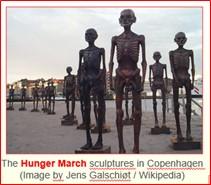 Afro-Asian Spectrum, International Knowledge Centre (IKnC), November 3, 2025, Göttingen, Germany, 2025.
Part I: This paper highlights the growing contrast between global pet prosperity and persistent human hunger. While dogs and cats have long enriched human lives, their populations and status have expanded dramatically, with over a billion pets worldwide. Increasing social isolation, aging populations, and declining birth rates have led many people to treat pets as family members or even child substitutes. This trend drives rapid growth in the pet food industry, including high-quality, “human-grade” products that compete with global food resources. At the same time, vast inequalities persist: hundreds of millions of people suffer from hunger or cannot afford a healthy diet. Significant amounts of pet food are wasted, while malnutrition causes millions of human deaths annually. The paper questions ethical priorities in resource allocation, emphasizing that solving global hunger is financially feasible but lacks political will. It ultimately calls for greater awareness and responsibility in balancing animal welfare, human needs, and sustainable resource use. Veröffentlichung |
|
Most of the 17 SDGs Are not on Track to Be Achieved by 2030!
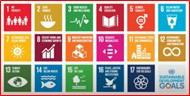 Afro-Asian Spectrum, International Knowledge Centre (IKnC), March 31, 2025, Göttingen, Germany, 2025, pp. 5-16.
Since the adoption of the 17 Sustainable Development Goals (SDGs) in 2015, global efforts—thousands of events, publications, and initiatives—have been insufficient. Only 12% of the goals are on track, nearly 50% are off track, and 30% have stagnated or regressed. SDG 2, Zero Hunger by 2030, illustrates persistent global failure: despite repeated targets since 1974, over 730 million people remain hungry, 2.8 billion cannot afford a healthy diet, and 9 million die annually from hunger-related causes. Political inaction, conflicts, climate change, economic crises, and insufficient public engagement hinder progress. Achieving Zero Hunger requires immediate, large-scale investments, innovation in agriculture, and long-term visionary leadership. While food security may be possible by 2050–2060 with technological advances, urgent coordinated global action and societal commitment are critical to prevent worsening hunger and instability. Veröffentlichung |
|
Vision Paper: Global Food Trends to Improve Human Health (2022-2052): Plant Molecular Farming and Edible Plant-Based Vaccines
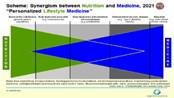 in: Plants for Immunity, (eds.) Behl, R.K., Sharma, P.K., Arya, R.K., and Chibbar, R.N., Agrobios Research, Jodhpur, India, 2023, pp. 3-23.
 The COVID-19 pandemic emphasized the urgent need for rapid, effective healthcare solutions. mRNA vaccines developed by BioNTech and Pfizer saved millions, proving the potential for fast responses to viral threats. Ongoing mutations and future pandemics highlight the importance of continued innovation. Nutrigenomics, personalized nutrition, and nutraceuticals are emerging to support DNA repair, immunity, and disease prevention, although many food-based claims remain unproven clinically. Plant-based and herbal supplements are increasingly used, but evidence-based validation is essential for safety. Advances in mRNA technology and nanoengineering are enabling edible plant-based vaccines, which can be grown locally, quickly, and without cold-chain dependence. Plant Molecular Farming (PMF) leverages plants as bioreactors to produce pharmaceuticals, vaccines, and protein-based foods affordably and at scale. High-income countries, such as through Moolec Science, develop animal-free proteins, while small firms lead PMF innovation due to lower costs and flexibility. Challenges include regulatory uncertainty, social acceptance, production optimization, and funding, especially in low- and middle-income countries. Success requires interdisciplinary collaboration, clinical validation, and integration into education, industry, and public health strategies, offering a future where biotechnology and diet synergistically improve global health. Veröffentlichung |
|
Vision Paper: Global Food Trends to Improve Human Health: 2025
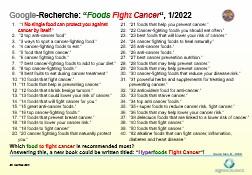 Proceedings of the 12th International Conference on Resource Management for Food, Agriculture, Environment and Health Sustainability, September 14-16, 2022, Göttingen, Germany, in: Resource Management Technologies for Food Security and Sustainability, (eds.) Behl, R.K., Sharma, P.K., Riedacker, A., and Flachowsky, G., Agribios International, Jodhpur, India, 2023.
The text outlines the global food situation and key food trends aimed at improving human health by 2025. Food security remains one of the world’s greatest challenges and has evolved into a global crisis despite decades of discussion. Hunger is considered avoidable, yet a lack of political will and concrete action persists. Climate change, conflicts, rising food prices, and the COVID-19 pandemic have further worsened the situation. Billions of people cannot afford a healthy diet, while resources are often used inefficiently. Future solutions include sustainable agriculture, more resilient supply chains, and targeted aid programs such as therapeutic foods. At the same time, new food trends are emerging: plant-based proteins and cultured meat could significantly transform food production. Personalized nutrition and the concept of “food as medicine” are also gaining importance. Overall, the text emphasizes that access to sufficient and healthy food is essential for global health, peace, and stability—and that immediate action is urgently needed. Veröffentlichung |
|
Persönliche Stellungnahme Dr. M. Kern, 35. Sitzung des Ausschusses für Ernährung, Landwirtschaft und Verbraucherschutz des Deutschen Bundestags 17. Wahlperiode
 https://webarchiv.bundestag.de/archive/2011/0603/bundestag/ausschuesse17/a10/anhoerungen/__A_04_4_2011_Welternaehrung/Stellungnahmen/A-Drs__451-C.pdf, 2011.
Dr. Manfred Kern’s statement on global food security argues that hunger persists despite sufficient global calorie production mainly due to structural poverty. Key causes include low agricultural productivity, limited access to resources, education, and markets, as well as political instability and environmental constraints. Additional emerging factors are climate change, increasing price volatility, bioenergy production, and financial speculation. Kern proposes sustainable increases in agricultural productivity, especially in developing countries, as the central solution. Priority should be given to smallholder farmers, rural areas, and the development of efficient value chains. He emphasizes the need for investments in research, infrastructure, education, and access to modern technologies and inputs. Reducing food losses and strengthening climate resilience are also crucial. From a policy perspective, Kern calls for realistic goals, measurable actions, and long-term strategies instead of short-term political initiatives. Stronger cooperation with the private sector is considered essential. Although agriculture has regained attention after the food crisis, he sees significant gaps in implementation. Overall, he warns of rising volatility in agricultural markets and the risk of new food crises without decisive and coordinated global action. Veröffentlichung |
|
Plenary keynote: “Factor Fn: Future Farming, Food, Feed, Fitness, Fuel, Fiber, Freshwater, Fishery, Forestry, Flora, Fauna, Fun, Freedom - Global Trends 2008/2025/2050“
 SGP-ICSAE: Sustainable Governance Project, International Conference on Sustainable Agriculture and Environment, July 2-6, 2008, Rakuno Gakuen Hokkaido University, Sapporo, Japan, 2008.
Agriculture is emerging as a major global trend driven by the need for sustainable food and energy production. Rapid population growth and changing consumption patterns will more than double food demand within 30 years, raising urgent questions about food security, equity, and sustainability. At the same time, agriculture must balance food and bioenergy production, as renewable energy—especially biomass—becomes increasingly important. Climate change is already reducing crop yields and will further challenge production systems. Ensuring access to food, energy, and water, while maintaining biodiversity and fertile land, is essential. Rising food prices, resource constraints, and global uncertainties add complexity. Future agriculture must become more efficient, knowledge-based, and sustainable, integrating food, feed, fuel, and environmental goals. Ultimately, innovative agricultural systems are key to reducing poverty, supporting development, and securing global stability. Veröffentlichung |
|
Exhibition: “Visualized Agenda 21 / Rio+10 / Rio+20” (2000-2025) 93 poster plates
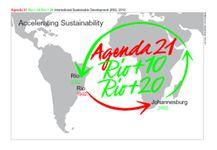
Background Information on the Exhibition Agenda 21 Rio + 10 Rio + 20 Many of us have very little idea of what is meant by the slogans "Agenda 21": Programme for Action for Sustainable Development from the 1992 Rio Conference, "Rio + 10", the Millennium Targets from Johannesburg in 2002, or "Rio + 20" in 2012. To bring out key messages of Agenda 21, Rio + 10 and Rio + 20 more clearly and to show the necessity of our work, a number of important statements were presented artistically in the form of a "Visualized Agenda 21 / Rio + 10 / Rio + 20". The first part of this travelling exhibition was presented for the first time at the EXPO 2000 in Hanover - the second part, incorporating the Millennium Targets, at the Johannesburg Summit in 2002 - and the third part, incorporating key strategies of the Rio de Janeiro Summit in 2012. 60 exhibitions have been put on in response to requests from Argentina, Austria, Belgium, Canada, Cape Verde Islands, China, Costa Rica, Cuba, France, Germany, Hungary, India, Japan, Jordan, Kenya, Malaysia, Singapore, South Africa, Spain, Switzerland, The Netherlands and The Philippines. The "Visualized Agenda 21 / Rio + 10" has been included up to now at more than 40 national and international congresses, UN conferences, symposia and events. The Bund-Länder Commission for Educational Planning and Research Promotion in Germany rated this exhibition as "of good educational value". Veröffentlichung |
|
Food Security in 2030/2050 at the Crossroads
 Food Security in 2030/2050 at the Crossroads –
A Wake-up Call in 2012! An Emergency Call in 2025!! Keynote lecture: International Webinar: “Food Security at Crossroads“ February 1, 2025, organized and hosted by Department of Agriculture, MM (DU), Mullana, India Challenges: Food Security, Food Insecurity, Global Food Demand and Supply 2030/2050, Land Use, SD Goal 2: Zero Hunger by 2030, Hunger 2030/2050, Malnutrition (Predictions versus Reality) Risks: Climate Change, Social Unrests, Conflicts, Wars, Migration, Plastic, Micro- and Nanoplastics (Invisible and Neglected Epidemic Pollution), Growing Pet Population, Ignorance of Societies, Lack of National and International Political Will, NON-‘United‘ Nations (“NON-UN“) Options: Innovations in Agriculture, Improvements of Food and Feed Quality, New Crop Protection Technologies, Smart Agriculture, IoT, Crop Monitoring, Drones, AI-ChatGPT Agrar, AI-Enabled Plant Breeding, PlantRNA-FM, Sequence Modelling and Design, New Crop Designs, DNA-®evolution, RNA-Sprays Results: Low Use of Fossil Energy, Fossil Fuel Free Farming, Eff-Eff-Agriculture (Efficiency + Effectiveness = Sustainability = “EffEffSus“), Zero Hunger by 2060 Emergency Call in 2025! Veröffentlichung |
|
120 Jahre Otto Hinsberg - Pflanzenschutz damals und heute
 Lecture by Dr. Manfred Kern: “120 years of Hinsberg - plant protection then and now” at MUXUM in Nackenheim on 12.01.2025
The cradle of German plant protection lies in Nackenheim/Rhine Summary Otto Hinsberg via ChatGPT 20.10.2024 1 Otto Hinsberg a pioneer and plant protector of the first hour Otto Hinsberg has left a lasting impact on agriculture and the environment through his pioneering work and commitment in the field of plant protection. His vision and innovation have helped pave the way for sustainable practices in agriculture and address the challenges of crop protection in a changing world. 2 Otto Hinsberg's innovations in crop protection Through his work and innovations in crop protection, Otto Hinsberg has made an important contribution to the development of sustainable and effective solutions that have met both the needs of agriculture and the requirements of environmental protection. 3 Otto Hinsberg, founder of the Plant Protection Industry Association, patents worldwide Overall, Otto Hinsberg has had a significant influence on the industry worldwide through his work in the Crop Protection Industry Association and his patents. His commitment to research, development and sustainable practices has helped to overcome the challenges in crop protection and make agriculture fit for the future. 4 Otto Hinsberg's life's work Otto Hinsberg's lifetime achievements have left a lasting impact on agriculture and plant protection. His commitment to sustainable practices and innovation have helped to address the challenges of crop protection in a changing world and lay the foundations for a more environmentally friendly agriculture. 5 Otto Hinsberg's first and oldest plant protection products factory, Nackenheim of global significance Overall, Otto Hinsberg's first and oldest pesticide factory in Nackenheim has had a lasting influence on the development of pesticides and agriculture worldwide. His innovation and commitment to sustainable practices have helped to advance the industry and address the challenges of modern agriculture. 6 Otto Hinsberg's significance for Nackenheim Overall, Otto Hinsberg is a key figure in the field of crop protection, whose work and commitment have had a far-reaching impact on agriculture and environmental protection. His importance extends beyond Nackenheim and has helped to promote sustainable practices in agriculture. - Otto Hinsberg: Inventor and developer of Hinsberg's “cold frame cultivation method” in horticulture. Significant and reliable increase in yield and the possibility of 3 harvests instead of 2. Direct forerunner of greenhouses and later vertical farming. - Mrs. Luise Hinsberg: Madonna figure, Nackenheim town hall, 1931 Luise Hinsberg donates rococo Madonna for the town hall in Nackenheim 1931, re-installed 6.5.1945 |
|
Ausstellung von Verena Reinmann: "Schönheit unter unseren Füßen"
 Einführungsvortrag von Dr. Manfred Kern zur Ausstellung von Verena Reinmann
"Schönheit unter unseren Füßen"
in der Volksbank Alzey-Worms eG in Worms am 25.09.2024.
Veröffentlichung |
|
Diapause or Metamorphosis - What Needs to Be Done in Europe?
 Diapause or Metamorphosis - What Needs to Be Done in Europe?
A Wake-Up Call in 2005* A Look Back at Europe Outlook in 2005 An Emergency Call in 2025 *Kern, M.: Diapause oder Metamorphose – Was ist zu tun in Europa? in: Das moderne Europa - Erbe und Auftrag, L. Tavernier (ed.), edition weimar, European Academy of Sciences and Arts, Weimar, 2007, p. 133-152 (German version). - English Version, 1/2025 - "Europe is confronted with new challenges as a result of globalization. Europe in upheaval. What needs to be done? Problems and tasks in modern Europe need to be addressed." This is the theme of the interdisciplinary symposium of the European Academy of Sciences and Arts 2004. Europe is confronted and challenged to deal with global developments, to name European problems and to describe future (domestic) tasks. Would that be sufficient and expedient? Probably not! Veröffentlichung |
|
ChatGPT, 05.10.2024: Contributions by Dr. Manfred J. Kern
 ChatGPT, 05.10.2024: Contributions by Dr. Manfred J. Kern
 ChatGPT is a generative artificial intelligence chatbot developed by OpenAI. “As a thought leader, Kern has been an influential voice in agricultural and environmental conferences and symposia. His work in educating stakeholders about the importance of sustainable practices, innovation, and technology in agriculture has inspired a new generation of scientists, farmers, and policymakers to pursue more sustainable and climate-resilient agricultural systems. Manfred Kern’s contributions to sustainable agriculture, technological innovation, and global food security are significant in the context of addressing broader environmental and climate-related challenges. His advocacy for precision farming, sustainable bioeconomy, and responsible use of resources in agriculture plays an essential role in reducing the environmental impact of farming and helping to build a more sustainable future for food production in a changing climate.” |
|
Most of the 17 SDG‘s Are not on Track to Be Achieved by 2030! SD Goal 2: Zero Hunger by 2030
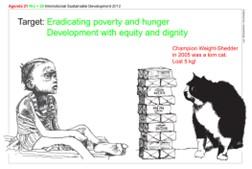 Most of the 17 SDG‘s Are not on Track to Be Achieved by 2030! SD Goal 2: Zero Hunger by 2030 presented during the 15th IFSDAA International Conference on: Challenges, Perspectives and Policies in the Area of Sustainable Development, Food Security, Environmental Health and Climate Change (2025/2050) Mahatma-Gandhi-Haus, Göttingen, Germany, October 04 – 06, 2024.
Just one example – SD Goal 2: Zero Hunger by 2030 Global Hunger, Malnutrition: Predictions and Reality, 1974-1992-2002-2015-2020-2030-2060 (2024): Conclusions made by the author:
|
|
Micro- and Nanoplastics 2025/2050: The Invisible and Neglected Epidemic Pollution, That Threatens Food Security and Safety, the Environment and Human Health
 Micro- and Nanoplastics 2025/2050: The Invisible and Neglected Epidemic Pollution, That Threatens Food Security and Safety, the Environment and Human Health, presented during The International Conference Sustainable Solutions, Shared Future Development Research for the 21st Century, Center for Development Research, University of Bonn, Gustav-Stresemann-Institut, Bonn, Germany, September 30 – October 02, 2024.
Bring epidemic plastic, micro- and nanoplastic pollution under control as soon as possible. Reduce! Reduce! Reduce! 33 Re’s: Rethink, Reorient, Reflect, Research, Report, Reduce, Refuse, Reject, Reuse, Recreate, Redesign, Reshape, Remodel, Reprocess, Recondition, Rebrand, Repair, Remove, Replace, Repurpose, Refill, Recycle, RecycleBot, RepRap, Resuspend, Recover, Remanufacture, Refurbish, Retexture, Remediate, Regulate, Restrict, React! – in Time! (Kern, M., 3/2024). Veröffentlichung |
|
Vision Paper: A Critical Overview on Reviews about Micro- and Nanoplastics, 2025/2050: The Invisible and Neglected Epidemic Pollution That Threatens Food Security and Safety, the Environment, and Human Health
 Vision Paper: A Critical Overview on Reviews about Micro- and Nanoplastics, 2025/2050: The Invisible and Neglected Epidemic Pollution That Threatens Food Security and Safety, the Environment, and Human Health published in: Sustainable Agriculture for Food Security under Climate Change, R.K. Behl, P.K. Sharma, R.K. Arya, S.A. Bagci and E. Morzog (eds.), Agrobios (International), Jodpur, India, 2024, pp 1-50.
Plastics are very useful and are used by everyone on the planet. In addition to the societal benefits that plastics have provided for more than 70 years, such as medical plastics that protect public health and save lives; lightweight plastics that reduce gas emissions and lower transportation costs; plastics in the automotive industry that increase safety; plastics in agriculture that increase yield and improve food safety and quality; plastic containers that enable food and water storage and make life easier, etc.., it is time to protect the marine, terrestrial and atmospheric environment, soil, soil organisms, water, crops, animals and people. Current and future generations of humanity are highly exposed to plastics, microplastics and nanoplastics through food consumption. Plastic, microplastic and nanoplastic pollution is inextricably linked to food safety, human health, and climate change. They pose an invisible, insidious, underestimated, and neglected threat to people and the environment. They do not stop at borders but are hidden and unknown biohazards. They are emerging "black swans". Micro/nanoplastic pollution undermines all 17 UN Sustainable Development Goals. |
|
Global Food Trends to Improve Human Health: 2025
 Vision Paper: Global Food Trends to Improve Human Health: 2025, published in: Resource Management Technolgies for Food Security and Sustainability, (eds.) R.K. Behl, K. Sharma, A. Riedacker & G. Flachowsky, Agrobios International, Jodhpur, India, 2023, p. 3-20.
Veröffentlichung
Vision Paper: Global Food Trends to Improve Human Health: 2025, published in: Resource Management Technolgies for Food Security and Sustainability, (eds.) R.K. Behl, K. Sharma, A. Riedacker & G. Flachowsky, Agrobios International, Jodhpur, India, 2023, p. 3-20.
Veröffentlichung |
|
Key note lecture: Climate Resilient Agriculture (2025/2050): Climate Resistant Crops + Fossil-Fuel-Free Farming presented at the International Conference on Climate Resilient Agriculture for Food Security and Sustainability, CCS Haryana Agricultural University, Hisar, India, February 17-19, 2023. (paper in prep.)
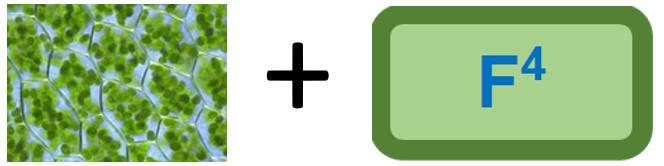 Improvements of crop qualities and the implementation of fossil-fuel-free farming systems are key challenges today and in future to safeguard healthy life of all people living on earth.
Prerequisites for the NEW Millennium Agriculture: 1. Improvement of Plant Breeding by a Second Green ®Evolution – a Green DNA-mRNA-®Evolution 2. Development and Implementation of a Tripartite Bio-Vision 2050 - F4: Fossil-Fuel-Free Farming + Mostly Emission-Free Farming + Sustainable Bio-Economy. Veröffentlichung |
|
White Paper, March 3, 2022: The Four Horsemen of Apocalypse Are on the Way - ‘Hunger‘ & ‘Pestilence‘ & ‘War‘ & ‘Death‘ published by ISPSW, Berlin, Issue No. 902, Feb. 2023.
 The Four Horsemen of Apocalypse hunger (1.1 billion people), pestilence (Corona virus), war (Putin’s war), and unnatural death are on the way across the globe, and unfortunately at the same time.
It has been thought, above all in western countries, that these Four Horsemen would never appear again, neither now nor in the future. Nevertheless, they are bringing destruction, heartache, disease, suffering, and death to many millions of people. While this critical synopsis outlines the omission, deception, self-deception, weakness, and unpreparedness among western societies, it also draws attention to a range of measures that aim to successfully counteract and eliminate the Four Horsemen. Veröffentlichung |
|
Key note lecture: 2022/23: Global Trends to Improve Food and Human Health (2025/2052) - Dual Use of Food: Medicine or Weapon? – Life or Death? - - Fossil Fuel Free Food Feed Farming Future (paper in prep.), 12th IFSDAA International Conference on: Resource Management for Food, Agriculture, Environment and Health Sustainability, Mahatma Gandhi-Haus, Göttingen, Germany, September 14-16, 2022.
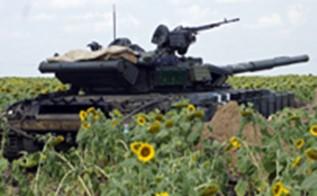 Since February 24, 2022 global food security is under heavy fire and everyone is challenged to safeguard food security in order to avoid hunger and death.
Improving crops and crop production are key challenges today and in future to safeguard healthy life of all people living on earth. Science, agriculture, food production/manufacturing and health care must go hand in hand in a synergistic way. Crossbreds from these essential sectors using cutting-edge genome editing technologies will enable to address successfully the following individual and global all over all targets by 2052:
Veröffentlichung |
|
Vision Paper: Global Trends to Improve Human Health (2022-2052): Plant Molecular Farming and Edible Plant Based Vaccines published in: Plants for Immunity, R.K. Behl, Pravin K. Sharma, Rajesh K. Arya & Ravindra N. Chibbar (eds.), Agrobios, India, 5/2022.
 Beginning of 2022, worldwide there are 298,915,721 confirmed cases of COVID19 and 5,469,303 deaths so far from the coronavirus COVID-19 outbreak since January 2020. Up to now, globally a total of 9,126,987,353 vaccine doses have been administered (WHO, 1/2022). A virus named COVID-19 has brought and continue to bring the world on its knees. The immune system of millions of people was/is not strong enough to tackle this virus. National restrictions, lockdowns and safety instructions were implemented in order to slow mote the pandemic. Functioning and registered pharmaceuticals or vaccines to tackle the problem were not on the market beginning 2021. But then, BioNTech & Pfizer have brought an Anti-COVID-19 vaccine to the market within 11 months only! The world is forced to foster solutions to overcome the actual pandemic and to be better prepared for coming ones. Veröffentlichung
 |
|
Food Security at the Crossroads – A Wake up Call 1854-2074
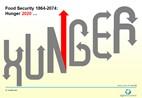 A brief look back over the last 150 years and the outlook for the next 60 years, compressed into a time frame of 30 years each, will provide an outline of conditions, backgrounds and intentions with respect to Article 25 of the Universal Declaration of Human Rights. A wake up call and an action list is presented in order to improve food security (availability, accessibility, affordability, acceptability) as quickly as possible in order to realize Article 25 of the Human Rights Declaration.
 Keep in mind the words of J. W. von Goethe (1749-1832): “To act is easy, to think is hard, to act as one thinks is the most difficult.” We’ve done more than enough thinking, it’s now 2012 and time to act! Meanwhile, it's 2020! Veröffentlichung |
|
Plant Based Protein by 2025/2050
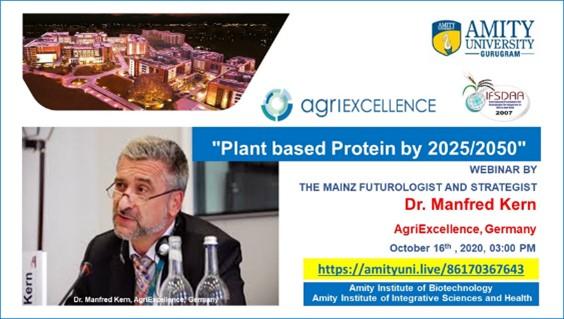 German strategist Dr. Manfred Kern from AgriExcellence delivered the webinar on “Plant based Protein by 2025/2050” at the Amity University Harayana, Insitute of Biotechnology, Manesar, Gurugram, India, October 16, 2020. Dr. Kern communicated that between 2015 and 2050 more than a doubling of crop production, a nearby doubling of meat production, a tripling of plant-based protein production (food & feed), and a tripling of fruit and vegetable production is necessary to feed 9.7 billion people living on earth in a healthy way.
https://menafn.com/1100998500/German-strategist-Dr-Manfred-Kern-from-AgriExcellence-delivered-the-webinar-on-Plant-based-Protein-by-20252050 http://mediabulletins.com/news/german-strategist-dr-manfred-kern-from-agriexcellence-delivered-the-webinar-on-plant-based-protein-by-2025-2050/ http://businessnewsthisweek.com/world/german-strategist-dr-manfred-kern-from-agriexcellence-delivered-the-webinar-on-plant-based-protein-by-2025-2050/ https://www.cityairnews.com/content/amity-university-haryana-hosted-international-webinar https://news4masses.com/tripling-of-plant-based-protein-production-by-2025-2050-german-strategist/ |
|
Plant-Based Meat Will Plow up Agriculture by 2025/2050!?
 was presented during the 12th IFSDAA International Webinar, October 2nd, 2020.
 Jagan Nath University situated in Jhajjar-Bahadurgarh road hosted a 12th IFSDAA International Webinar on “Trends in Technology for Agriculture, Food, Nutrition, Environment and Health”. This was in account to celebrate the birthday of the great visionary, reformer and world leader Mahatma Gandhi Ji, who believed in spirituality, divinity, humanity, peace on the planet earth where all live with dignity. |
|
Trends in Technology for Agriculture, Food, Environment and Health, 2020
 "Science, technology, innovations and entreprenuership can increase the efficiency, effectiveness, impact and complement the efforts of government and institutions for socio-economic and environental benefits under climate change. Several innovations and green technologies, bio-technologies, agri-technologies developed and spread around the world over the last few decades, have helped improving crop growth and health, establishing enterprises in agriculture, food and feed processing, health/hygiene, infrastructure and civic amenties in rural and urban settings."
 |
|
Meat Alternatives (“Plant-Based Meat”) Will Plow up Agriculture in the Future by 2025/2050!?
 Meat or no Meat? – That’s the Question / is not the Question!”
 “Proceedings of International Seminar on “Harnessing Scientific, Technological Innovations and Entrepreneurship for Sustainable Development in Africa and Asia”, September 2-4th, 2019, Göttingen, Germany. In: Trends in Technology for Agriculture, Food, Environment & Health, R.K. Behl, Machiavelli Singh, Achim Ibenthal and Manfred Kern (eds.), Agrobios (International), Jodhpur, India, September 2020. Veröffentlichung |
|
Corona-Pandemie – eine kritische Analyse mit Anregungen für die militär-strategische Ebene, 2020
 Ein kritische Analyse geschrieben für und veröffentlicht vom Förderkreis Deutsches Heer e.V. (FKH) im Mai/Juni 2020.Veröffentlichung
 |
|
Global Epidemics, Pandemics, Terrorism: Risk Assessment & European Responses (Part II)
 Due to the current occasion regarding the corona pandemic, a reprint of the article (2016) was made by: Politisch-Militärische Gesellschaft e.V. (pmg), Köln, Germany,
|
|
Global Epidemics, Pandemics, Terrorism: Risk Assessment & European Responses (Part I)
 Due to the current occasion regarding the corona pandemic, a reprint of the article (2016) was made by: Politisch-Militärische Gesellschaft e.V. (pmg), Köln, Germany,
|
|
Future Outlook for Pig Production and Global Pork Market 2025/2050
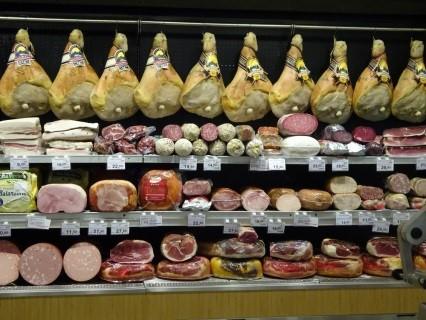 Key note lecture will be given during the 50th Anniversary for Alberta Pork, Merriot Hotel, Calgary, Canada, November 21, 2019.
In preparation |
|
From Agricultural Research to Agribusiness by Factor C^n: Capability, Capacity and Competency …
 Veröffentlichung
 |
|
Fruits and Vegetables Alternatives (“Lab-grown”, “Fruit & Veg-cell Based”) Will Increase Horticulture in Future by 2025/2050!?
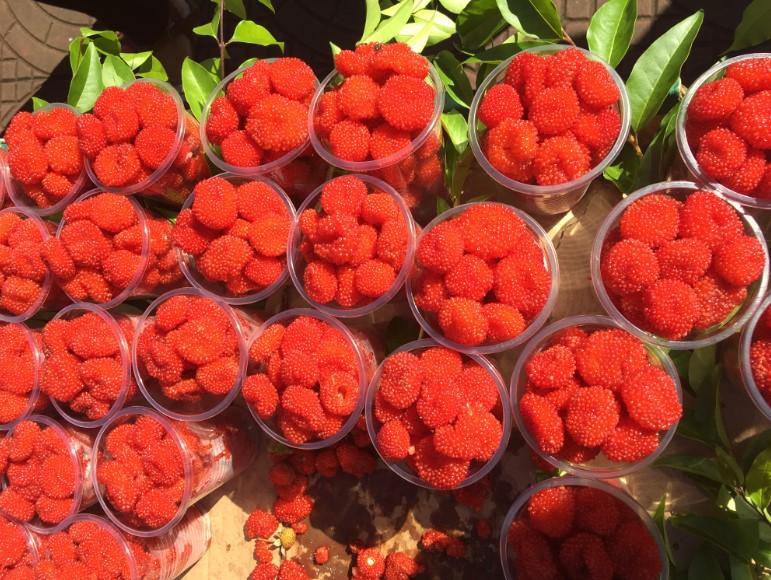
|
|
Meat Alternatives (“Plant-Based Meat”, “Cell-Cultured Meat”) Will Plow up Agriculture in Future by 2025/2050!?
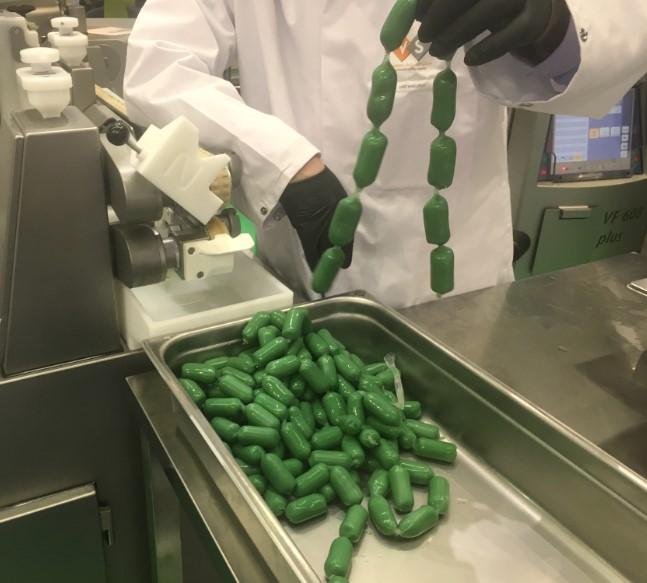
|
|
Agrarbranche im ®evolutionären Umbruch - Megatrends
|
|
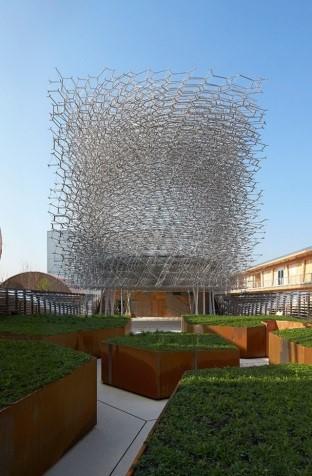
The Key Role of Apiculture^3 in Global Food & Nutrition Security until 2025/2050
|
|
Future of Agriculture 2025/2050

|
|
Wo liegt die Zukunft der deutschen Landwirtschaft, wenn Märkte nicht mehr wachsen?
|
|
Wer ernährt – wer verzehrt die Welt? Werden die Bauern im Kreis Höxter in Zukunft noch gebraucht?
|
|
Wohin sich der Ackerbau entwickelt – ein globaler Ausblick
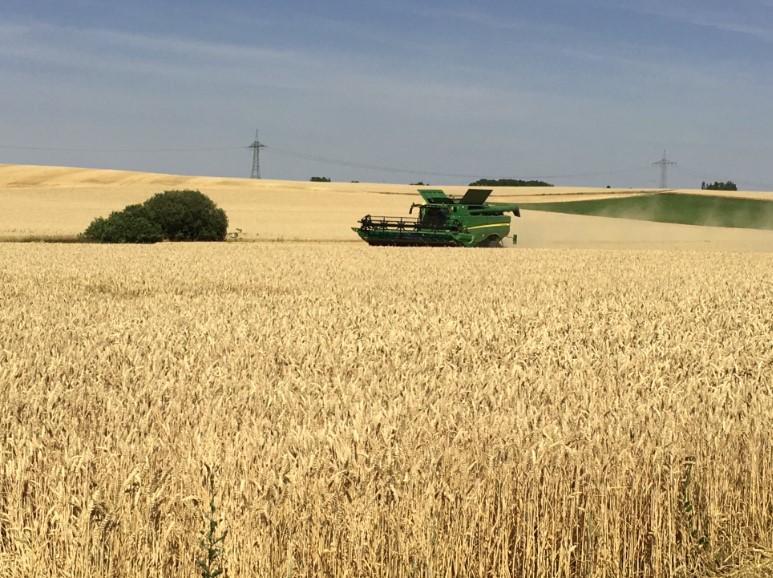
|
|
Deutschland ohne Landwirtschaft – ist das möglich?
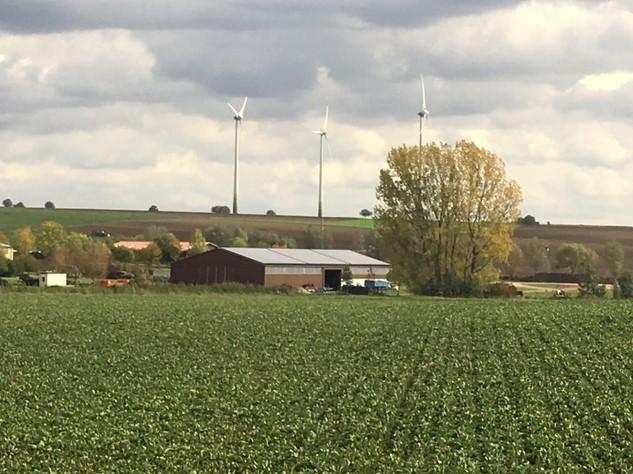
|
|
Impact of Pollinator Services on Global Food & Nutrition Security 2025/2050
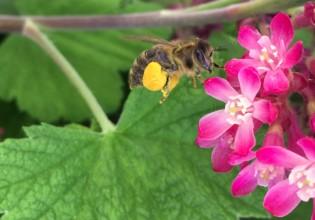 Plenary lecture presented during the Apimondia International Symposium 2018, UN Economic Commission for Africa Conference Hall, Addis Ababa, Ethiopia, November 30 – December 04, 2018.
Summary available on request |
|
Wird der deutsche Landwirt in Deutschland noch gebraucht?
 Plenarvortrag auf der Bezirksversammlung der Vereinigten Hagelversicherung VV aG, Bezirksdirektion Stuttgart in Trochtelfingen, Flair Hotel Rössle, 21. November 2018.
|
|
From Agricultural Research to Agribusiness by Factor C^n: Capability, Capacity and Competency - Context, Culture, Conscience, Conscientiousness, Commitment, Creativity, Courage, Communication, Consensus, Connectivity, Catalysts, Coaches, Cooperation, Coordination, Coherence, Continuance, Countability, Capital, Convenience, Customers, …
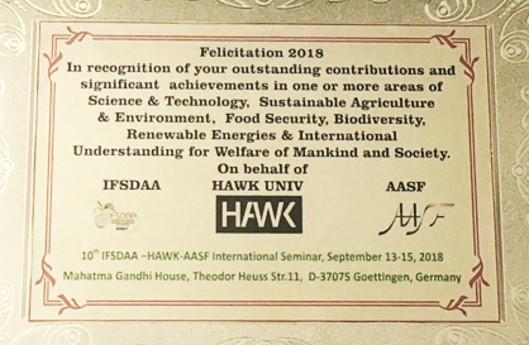 Opening key note lecture held during the 10th International Seminar on Harnessing Science and Technology Applications through Capacity Building and Economic Policies for Sustainable Development, September 13-15, 2018, Mahatma Gandhi House, Göttingen, Germany.
Veröffentlichung
Opening key note lecture held during the 10th International Seminar on Harnessing Science and Technology Applications through Capacity Building and Economic Policies for Sustainable Development, September 13-15, 2018, Mahatma Gandhi House, Göttingen, Germany.
Veröffentlichung |
|
Moderne Biotechnologien im Spannungsfeld von Ernährungs- = Friedenssicherung, Bioediting, Biowaffen und Bioethik
 Plenarvortrag gehalten auf dem Parlamentarischen Abend des Förderkreises Deutsches Heer e.V. am 18. April 2018 im Haus der Deutschen Parlamentarischen Gesellschaft in Berlin, Deutschland.
|
|
Changing Horizons: Renewable Energy for a "Fossil-Fuel-Free Farming" - Vision 2025/2050
 Opening key note lecture held during the International Conference on Innovative Technologies towards Energy, Environment, Food & Sustainable Agriculture, February 26-28, 2018, Department of Mechanical Engineering, Raja Balwant Singh Engineering Technical Campus, Bichpuri, Agra (U.P.), India.Veröffentlichung
 |
|
Challenges of Sustainable Bio-economy: De-Materialization, De-Carbonization and Re-Arrangement of Resources – Vision 2025/2050
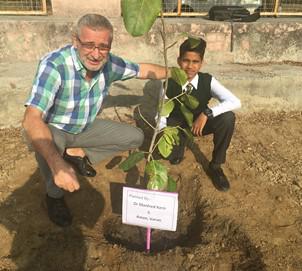 Key note lecture presented during the International Conference on Sustainable Agriculture, Energy, Environment and Technology (ICSAEET-2018), February 24-25, 2018, Department of Zoology, Maharshi Dayanand University, Rohtak, Haryana, India.
Veröffentlichung
Key note lecture presented during the International Conference on Sustainable Agriculture, Energy, Environment and Technology (ICSAEET-2018), February 24-25, 2018, Department of Zoology, Maharshi Dayanand University, Rohtak, Haryana, India.
Veröffentlichung |
|
Strategic Necessity of Biotechnology, Nano-biotechnology, Gene Editing, and Gene-Drive in Future Crop Production - Vision 2025/2050
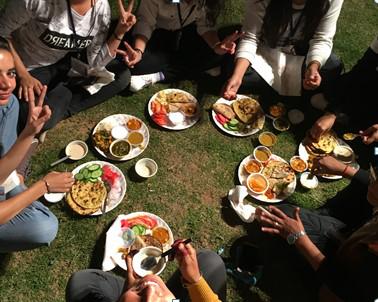 Key note lecture presented at International Conference on Bio and Nano Technologies for Sustainable Agriculture, Food, Health, Energy and Industry (ICBN-2018), February 21-23, 2018, Department of Bio and Nano Technology, Guru Jambheshwar University of Science and Technology, Hisar, Haryana & Society for Sustainable Agriculture & Resource Management, India.Veröffentlichung
 |
|
Mitigating the Effects of Climate Change on Crop Production
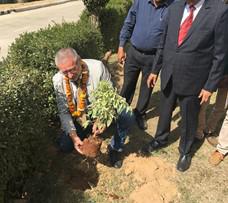 Lead speaker address made at the International Workshop on Strategies for Mitigating Effects of Climate Change, February 20, 2018, Departments of Agriculture, Law, Management, Mass Communication, Physiotherapy, Jagannath University Bahadurgarh, Haryana, India.
 |
|
Wird Landwirtschaft in Deutschland noch gebraucht?
 Plenarvortrag auf der Winterfachtagung der VR-Bank in Südniedersachsen im Best Western Hotel und Veranstaltungshof „Schlossmühle“ am 13./14.02.2018 in Quedlinburg/Harz, Deutschland.
Handout auf Anfrage verfügbar. |
|
Zukunft der deutschen Landwirtschaft im Spannungsfeld nationaler, regionaler und globaler Entwicklungen
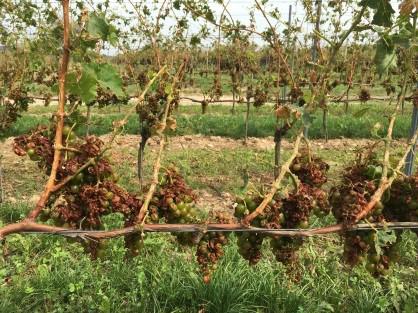 Plenarvortrag auf der Bezirksversammlung der Vereinigten Hagelversicherung VV aG, Bezirksdirektion Stuttgart in der Zehntscheuer am 06. Dezember 2017 in Weikersheim-Laudenbach.
Handout ist auf Anfrage verfügbar. |
|
Factor Bio: Bio-Vision, Biomass, Bioenergy, Biogas, Bioethanol, Biodiesel, Bio-aniline, Bio-refineries, Bio-fertilizer, Biochar, Biodegradable Plastics, Bio-food/feed Ingredients, Bio-threats, Bio-risks, Bio-apps, Bioinformatics, Biotechnology, Biodiversity, Bio-sugar, Bio-economy, and Bio-utopia Based on Sugar Beets: 2018/2025/2050
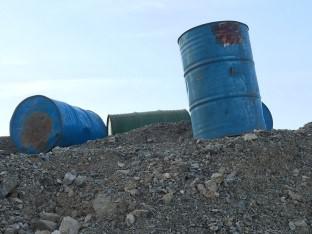 Plenary lecture was presented during the 8th ICSA International Conference on Food, Energy, Industry and Environment in Regional and Global Context at the Faculty of Environment Science, University of Teheran, November 21-23, 2017, Teheran, Iran.
 |
|
Hidden Hunger versus Impertinent Intemperance: Some Dogs and Cats Feed Gourmet-Quality – and a Lot of People Eat Dirt … An Eye-Opener - Not a Vision
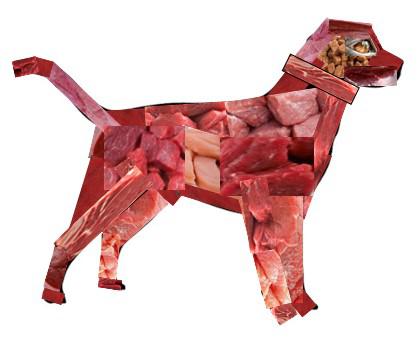 Key note lecture held at 9th International Seminar on Sustainable Intensification of Agriculture through Resource Management and Conservation July 7-9, 2017, Mahatma Gandhi House, Göttingen, Germany.Veröffentlichung
 |
|
What Will Shape Future Livestock Industry and Grain Market: 2017/2025/2050? Livestock Industry in the Field of Tension of National, Regional and Global Developments: 2017/2025/2050?
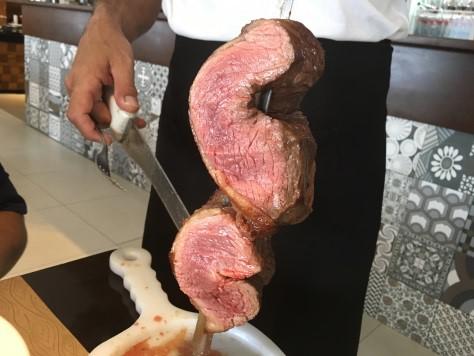 Plenary lectures presented at Bayer Animal Health Customer Meetings:
|
|
Zukunft der deutschen Landwirtschaft im Spannungsfeld nationaler, regionaler und globaler Entwicklungen
 Plenarvortrag auf der Bezirksversammlung der Vereinigten Hagelversicherung VV aG, Bezirksdirektion Stuttgart in der Federseeklinik am 06. Dezember 2016 in Bad Buchau.
Handout ist auf Anfrage verfügbar. |
|
Strategic Essentials to Be Business Partner of a Sustainable Food Value Chain
 Paper was presented during the „Managerfortbildungsprogramm zur Förderung der Außenwirtschafts-beziehungen zwischen Deutschland und Russland des BMWi“, October 21, 2016, BayKomm Communication Center, Leverkusen, Germany.
Presentation is available on request. |
|
Global Epidemics, Pandemics, Terrorism: Risk Assessment and European Responses
 The paper "Global Epidemics, Pandemics, Terrorism: Risk Assessment and European Responses" analyses from a European point of view global risk dimensions, risk reservoirs, risk assessment, risk communication, risk responses and risk recommendations in the context of future epidemics and pandemics resulting from biohazards. Several recommendations are made for preventing, assessing and responding to epidemics, pandemics and terrorism more effectively and efficiently in real time in order to save human lives.Veröffentlichung
 |
|
Global Epidemics, Pandemics: European Risk Assessment and Capacity to Control
 Paper was presented during the 6th RINSA-KAS Joint International Conference, “Transnational Risk Assessment and Responses: Europe & Korea”, May 16th, 2016, Chosun Hotel, Seoul, Korea.
Presentation is available on request. |
|
Tüte – Teller – Taille- Tagesmeldungen – Ernährung ungeschminkt!
 Plenarvortrag auf dem Kreislandfrauentag der Landfrauenvereine im Landkreis Hildesheim im Relexa Hotel am 8. April 2016 in Bad Salzdetfurth
„Zwischen Information und Provokation“, Tarek Abu Ajamieh, Hildesheimer Allgemeine Zeitung Handout ist auf Anfrage verfügbar. |
|
Bemerkenswerte bzw. unglaublich gute Gedanken …
 im Grußwort von Dietmar Dertwinkel, Vorstand der Volksbank Greven eG anlässlich der Einladung „AgrarKultur“ am 15.01.2016 im Ballenlager in Greven.Veröffentlichung
 |
|
Impressionen von der EXPO 2015 in Mailand, Italien, 7/2015
 Besonders beeindruckend waren die Pavillions von: Frankreich, Russland, Großbritannien, China, Japan, Italien, Deutschland, Korea, Azerbaijan, Brasilien und Qatar. Besonders auffallend: Überall viele Objekte aus Plastikmaterialien
Veröffentlichung
Besonders beeindruckend waren die Pavillions von: Frankreich, Russland, Großbritannien, China, Japan, Italien, Deutschland, Korea, Azerbaijan, Brasilien und Qatar. Besonders auffallend: Überall viele Objekte aus Plastikmaterialien
Veröffentlichung |
|
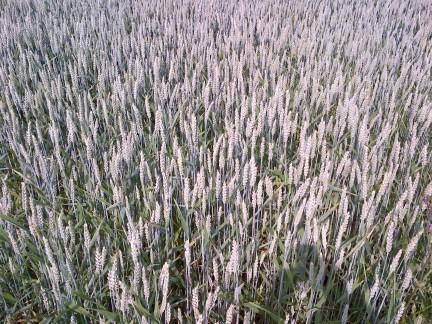
Globale, regionale und nationale Getreide- und Ölsaatenmärkte: Herausforderungen 2015/2025 und ein Ausblick auf die bevorstehende Erntesituation
|
|
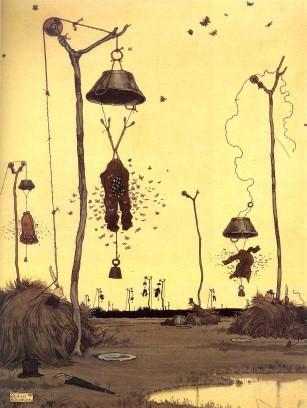
Actual and Innovative Trends in Crop Protection: 2015 / 2025 / 2035
|
|
Zukunftsperspektiven der Landwirtschaft Im Spannungsfeld politischer, regionaler und globaler Entwicklungen

|
|
Vision: Do more with less, better and in time! Sustainable Value Creation in Agriculture by Implementing Digital Technologies
 2015: Implementation of digital technologies in agriculture will improve the prospects of being able to use our limited natural resources to the best. By pressing the IGREEN ®evolution forward in agriculture through implementation of digital systems such as smartphones, apps, global positioning systems (GPSs), sensors, robotics, drones, unmanned autonomous vehicles (ULVs), and others, the changing world will be able to address “Factor Fn (“FFFF FFFF FFFF FFFF”): Future Farming, Food, Feed, Fitness, Fuel, Fiber, Flowers, Freshwater, Fishery, Forestry, Flora, Fauna, Fun, Fortune, Freedom”, which are milestones on a roadmap for tackling the challenges of the 21st Century.
Veröffentlichung
2015: Implementation of digital technologies in agriculture will improve the prospects of being able to use our limited natural resources to the best. By pressing the IGREEN ®evolution forward in agriculture through implementation of digital systems such as smartphones, apps, global positioning systems (GPSs), sensors, robotics, drones, unmanned autonomous vehicles (ULVs), and others, the changing world will be able to address “Factor Fn (“FFFF FFFF FFFF FFFF”): Future Farming, Food, Feed, Fitness, Fuel, Fiber, Flowers, Freshwater, Fishery, Forestry, Flora, Fauna, Fun, Fortune, Freedom”, which are milestones on a roadmap for tackling the challenges of the 21st Century.
Veröffentlichung |
|
The DNA-®evolution of Agriculture
 Publikation in "Production and Processing of Food Crops for Value Addition: Technology and Genetic Options." Eds: R.K. Behl, A.P. Singh, A.B. Lal , and G. Haesaert, Agrobios (International) Publishers, 2015, pp 1-6 , Book pages 1-347, ISBN: 978-93-81191-05-7Veröffentlichung
 |
|
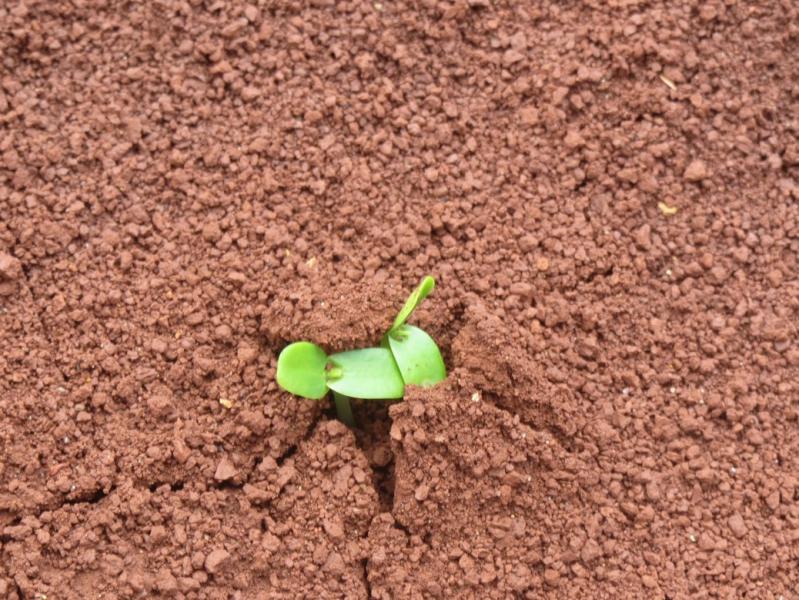
“Nur der Boden erkennt die Güte der Saat“ (Saint-Exupéry, A., 1939) bzw. “Nur die Saat erkennt die Güte des Bodens“ (Kern, M., 2002)
|
|
Exhibition “Colours of the Earth”, Verena Reinmann, UNCCD, Bonn, Day to Combat Desertification, June 17 – July 31, 2014
 Sand und Erde sind nicht „Dreck“ oder „schmutzig“, sondern wunderschön, besonders wertvoll und letztlich unsere Lebensgrundlage.
„Erde ist wertvoller als Gold, aber die meisten Menschen wissen das nicht!“ (Kern, M., 2008) Die Künstlerin Verena Reinmann hat Sand und Erde aus 123 Ländern in ungewöhnliche, farbenprächtige und faszinierendeKunstwerke verwandelt und diese bei der UNCCD in Bonn zur Ausstellung gebracht. www.verena-reinmann.de und www.unccd.de „Ich bin begeistert, dass Boden, ohne den es kein Leben geben kann, endlich in den Mittelpunkt gerückt wird“ (Prof. Richard Sikora, emeritierter Professorder Universität in Bonn). Aktuelle Herausforderung: Möglicherweise gibt es jemanden auf der Erde, der künstlerisch das Zusammenwirken von: “Seeds and Soil of the Earth“ kreativ umsetzen kann – Ideen sind herzlich willkommen! |
|
Innovative Agricultural Technologies Are Keys to Feed the World: 2015/2025/2070
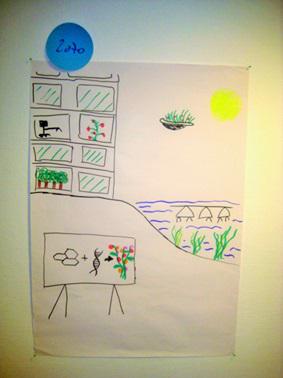 Trend study is available on request.
 |
|
Aquaculture: 2015-2025 / 2015-2050
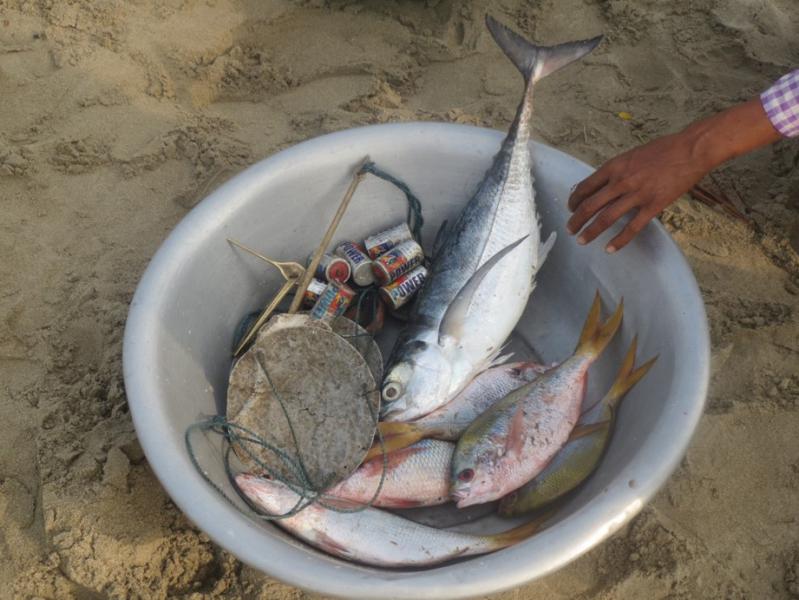 Vision paper is describing general global trends, economic development, urbanization, new middle class, eating habits as well as global/national fish demand and supply; actual trends in selected countries in Asia such as China, Vietnam, Thailand, Myanmar, Bangladesh, India, New Zealand, Australia, Indonesia, in Europe, Norway, Scotland; impact of actual and future diseases; actual challenges/problems “Bifurcation of the Supply Chain”: Low/High Production Costs vs. High/Low Fish Price (Salmon, Shrimp, Tilapia, Pangasius); an Aquaculture-Outlook: 2015 – 2025/2050.
Vision paper “Aquaculture” (200 charts) is available on request. |
|
Beef: 2015-2025 / 2015-2050
 Vision paper is describing general global trends, economic development, urbanization, eating habits as well as global/national beef demand and supply; actual trends in selected countries such as U.S., Europe, India, Brazil, Argentina, Uruguay, Paraguay, New Zealand, Australia, Canada, China, Russia, Indonesia, South-Africa, Mexico, Korea, Vietnam; actual challenges/problems “Wild Carts”; a Beef-Outlook: 2015 – 2025/2050.
Vision paper “Beef” (200 charts) is available on request. |
|
Dairy: 2015-2025 / 2015-2050
 Vision paper is describing general global trends, economic development, urbanization, new consumers, eating habits,as well as global/national milk demand and supply; costs of milk production; actual trends in selected countries such as Europe, Russia, New Zealand, Indonesia, U.S., Canada, Australia, Brazil, Turkey, China, India, Thailand, Myanmar; actual challenges/problems “Crossing Over”: Low/High Production Costs vs. High/Low Dairy Prices; a Dairy-Outlook: 2015 – 2025/2050.
Vision paper “Dairy” (200 charts) is available on request. |
|
Fossil-Fuel-Free Farming in 2025 – 2050
Vision paper is running. |
|
Future of Agriculture: Opportunities and Risks for Crop Production and Inerts Industry
 Trend study is available on request.
 |
|
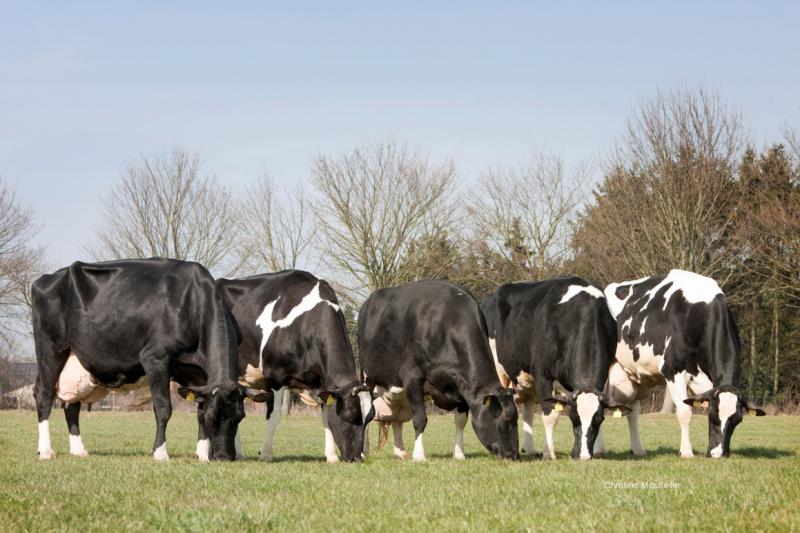
Wo steht die Landwirtschaft und der Milchmarkt nach 2015?
|
|
„Sein oder nicht Sein“ - Mit Courage und Können in eine Landwirtschaft mit Zukunft!
|
|
University for Peace, Costa Rica
 International Evaluation for SINAES (National Higher Education System) of Master’s Programs at University of PEACE, Costa Rica, September 2013
Veröffentlichung
International Evaluation for SINAES (National Higher Education System) of Master’s Programs at University of PEACE, Costa Rica, September 2013
Veröffentlichung |
|
Excursion on Sugar Production in Maui, Hawaii, USA
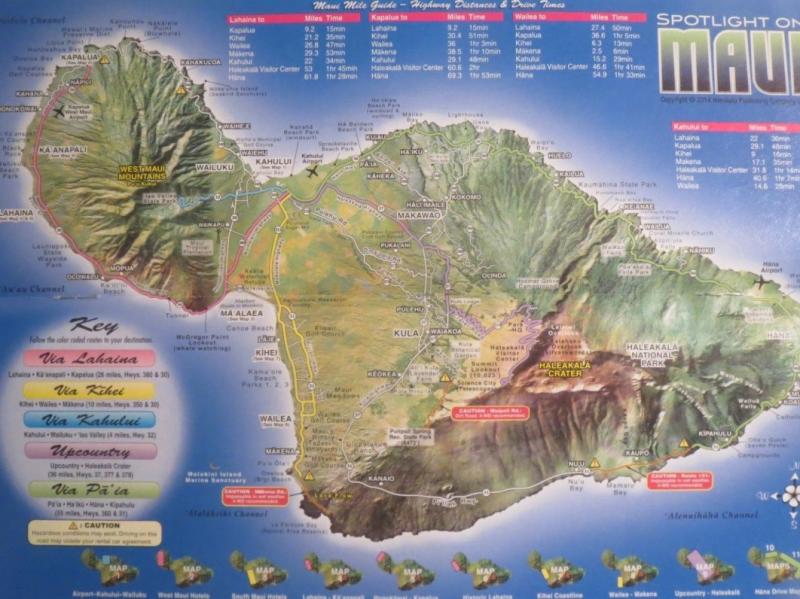 A short description of sugar production in Maui, Hawaii is given documenting the history, development and perspectives of sugar cane production (36,000 acres) on the island (June 03-06, 2014).Veröffentlichung
 |
|
Food, Feed, Fibre, Fuel and Industrial Products of the Future
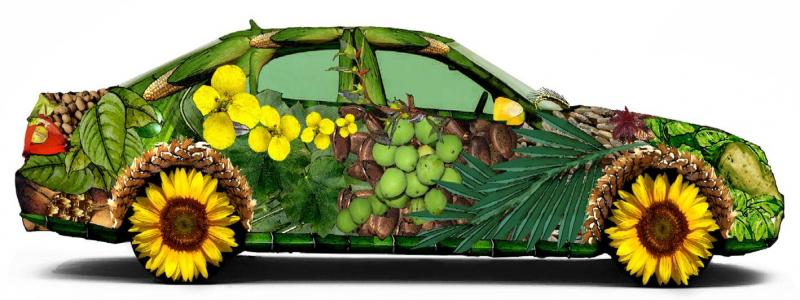 Plants and plant crops have always been, and will continue to be, of vital importance for humankind. They are an essential source of food, feed, raw materials, energy and plesaure.
Veröffentlichung
Plants and plant crops have always been, and will continue to be, of vital importance for humankind. They are an essential source of food, feed, raw materials, energy and plesaure.
Veröffentlichung |
|
An Essential Overview of Climate Change and Crop Protection / Crop Production
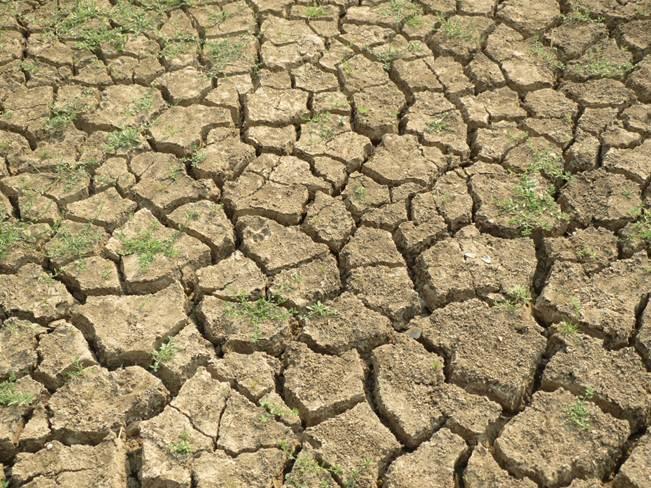 Key note lecture: "An Essential Overview of Climate Change and Crop Protection / Crop Production", Informa Life Sciences, 3rd Annual Conference Research and Development for Crop Protection, Crowne Plaza, 28-29 February 2012, Berlin, Deutschland.
|
|
What Will Drive the Swine Industry in the Forthcoming Decades?
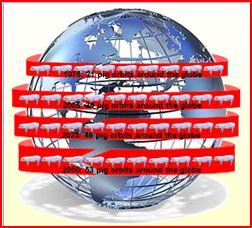 Key note lecture: “What Will Drive the Swine Industry in the Forthcoming Decades?“ during the 20th International Pig Veterinary Congress, 2nd Bayer Pig Symposium 2008, June 24th, 2008, Southern Sun North Beach Hotel, Durban, South-Africa.
|
|
Feeding the World ... or/and Saving the Planet!?
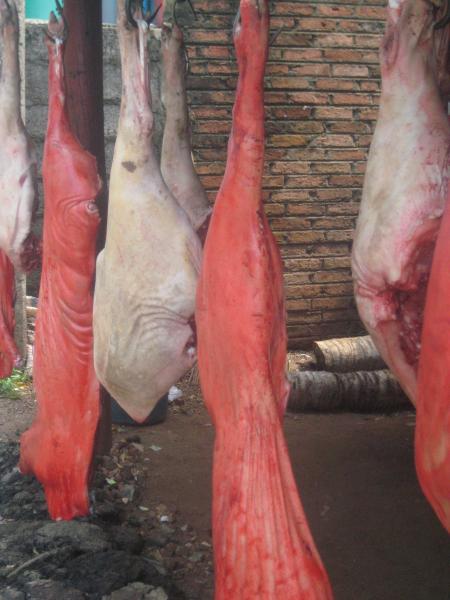 Key note lecture: "Feeding the World ... or/and Saving the Planet!?" Environmental Costs of Pig Production: Change the Paradigm?" during the 22nd InternationalPig Veterinary Congress: "Happy Pigs - Healthy People", IPVS, 14th International Bayer Pig Symposium 2012, June 11th, 2012, ICC, Jeju, Korea.
|
|
Future of Agriculture - Global Trends 2025
 Lecture & Seminar titeled "Future of Agriculture - Global Trends 2025" during ZEFc Disciplinary Course "Ecology, Water Use and Development", January 2014, Center of Development Resaerch, University of Bonn, Germany.
|
|
Zukunftsperspektiven der Landwirtschaft im Spannungsfeld politischer, regionaler und globaler Entwicklungen
|
|
Agricultural Interventions for Food, Environment and Health in Order to Serve Societies
 Key note lecture: "Agricultural Interventions for Food, Environment and Health in Order to Serve Societies", IFSDAA 2nd International Seminar on Cutting-Edge Science & Technologies towards Food, Environment and Health, Focus: Civil Society 2.-4. September 2013, Gerhard-Mercker-Begegnungszentrum, Göttingen, Germany.
|
|
Weltweiter Hoffnungsträger Landwirtschaft? Was kann sie wirklich leisten
 Plenarvortrag: "Weltweiter Hoffnungsträger Landwirtschaft? - Was kann sie wirklich leisten? Was gilt es zu tun?", Vereinigte Hagelversicherung VVaG: Bezirksversammlung 2013 Kultur- und Kongresszentrum Bad Langensalza 12. Dezember 2013, Bad Langensalza, Deutschland.
|
|
Perspektiven der Landwirtschaft im Spannungsfeld der 10 Ts
 Plenarvortrag: "Perspektiven der Landwirtschaft im Spannungsfeld der 10 T: Teller, Trog, Tierfutter, Tank,Tonne, Taille, Tarock, Tagesmeldungen, Tagespolitik - 2013/2025 2050", Landwirtschaftskammer Nordrhein-Westfalen und Sparkasse Paderborn-Detmold: Landwirte-Forum 2013 18. November 2013, Detmold, Deutschland.
|

|